



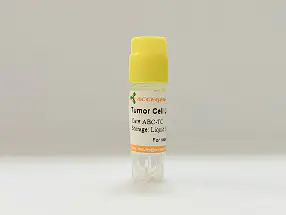
For research use only
| Cat No. | ABC-TC506S |
| Product Type | Human Colon Cancer Cell Lines |
| Cell Type | Epithelial |
| Species | Human |
| Growth Conditions | 37 ℃, 5% CO2 |
| Source Organ | Colon |
| Product Code | HCA7; HCA 7 |
HCA-7 cells form polarized colorectal adenocarcinoma monolayers, express COX-2 and mPGES-1, and show strong tumorigenicity in nude mice models.
HCA-7 is a human colorectal adenocarcinoma cell line derived from a 58-year-old female patient with moderately differentiated mucinous colon carcinoma. This adherent epithelial-like cell line forms polarized monolayers in culture, recapitulating key features of colonic epithelium. A distinguishing characteristic of HCA-7 is its ability to establish well-differentiated, polarized epithelial structures. A key feature is that this cell line expresses high levels of cyclooxygenase-2 (COX-2) and microsomal prostaglandin E synthase-1 (mPGES-1). HCA-7 demonstrates strong tumorigenicity in xenograft models, forming tumors when inoculated subcutaneously into nude mice. Due to these properties, HCA-7 is widely employed in studies of colon cancer progression, drug resistance mechanisms, and therapeutic screening.
| Product Code | HCA7; HCA 7 |
| Species | Human |
| Cat.No | ABC-TC506S |
| Product Category | Tumor Cell Lines |
| Size/Quantity | 1 vial |
| Cell Type | Epithelial |
| Growth Mode | Adherent |
| Shipping Info | Dry Ice |
| Growth Conditions | 37 ℃, 5% CO2 |
| Source Organ | Colon |
| Biosafety Level | 1 |
| Storage | Liquid Nitrogen |
| Product Type | Human Colon Cancer Cell Lines |
The HCA-7 cell line serves as a for studying colorectal cancer biology, particularly in understanding the role of COX-2 in tumorigenesis and inflammation. It is also widely used in research on transepithelial transport, epithelial cell polarity, and the regulation of barrier function by hormones and other factors. Due to the unique Cox-2 expression and its ability to form polarized epithelial layers, HCA-7 is an ideal platform for evaluating the molecular mechanisms underlying colorectal carcinogenesis and testing potential therapeutic interventions targeting COX-2 pathways.
When you publish your research, please cite our product as “AcceGen Biotech Cat.# XXX-0000”. In return, we’ll give you a $200 coupon. Simply click here and submit your paper’s PubMed ID (PMID).